There is a dangerous illusion still floating around small and medium businesses heading into 2026. The idea that cyber attacks are something that happens to other companies. Bigger companies. Louder companies. Richer companies.
That illusion is costing businesses real money, real customers, and real sleep.
Hackers are not waiting for you to get serious about security. They are not impressed by your size, your location, or your excuses. They are scanning constantly, automatically, and relentlessly. And if your business shows even the smallest crack, you are already on the list.
This is not fear mongering. It is math.
Automation broke the old rules of targeting:
The biggest shift most SMBs still do not understand is that attackers no longer pick targets manually. They do not research your company. They do not care what industry you are in. They do not care if you are profitable.
Automated tools now scan the internet twenty four hours a day looking for exposed systems, weak passwords, outdated software, misconfigured cloud services, and unsecured remote access. If your business pops up in that scan, the attack starts.
This is why the old belief of being too small to matter is dead. Size no longer protects you. Visibility is enough.
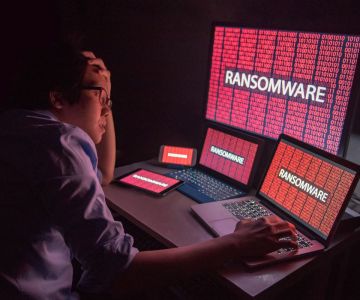
Ransomware gangs rent out their tools like subscription software. Phishing kits come pre built. Attackers do not need skill anymore. They need access. And SMBs provide plenty of it.
AI made scams faster and harder to spot:
As if automation was not enough, artificial intelligence poured gasoline on the fire.
Phishing emails are no longer full of spelling mistakes and awkward language. They are clean, personalized, and convincing. They reference real vendors. They mimic real executives. They show up at the worst possible moment, usually when someone is rushed.
Voice deepfakes are no longer science fiction. Fake phone calls that sound like your boss asking for urgent payments are already happening. Fake emails that look exactly like your accounting firm or cloud provider are landing in inboxes every day.
These attacks work because they target people, not systems.
And SMBs, with lean teams and informal processes, are the perfect environment for social engineering to succeed.
Most SMBs are still under protected by choice:
Here is the uncomfortable part. Many SMBs are not under protected because security is expensive. They are under protected because security was never treated as a business priority.
Cybersecurity budgets are often the first to be trimmed and the last to be approved. MFA feels inconvenient. Endpoint protection feels unnecessary. Training feels optional. Insurance feels like something to deal with later.
Later has arrived.
Surveys show a majority of small businesses have already experienced cyber incidents, yet fewer than half feel ready to handle one. Even fewer carry cyber insurance. Many do not even know what their policy would require to pay out.
This is not a technology failure. It is a leadership failure.
The baseline moved and many businesses missed it
In 2026, basic security no longer means antivirus and hope.
Multifactor authentication is no longer advanced. It is expected. Endpoint detection and response replaced basic antivirus years ago. Offline backups are not optional. Regular patching is not something you do when you have time.
These are table stakes now.
Remote work made this worse. Home networks. Personal devices. Unsecured Wi Fi. All of it expanded the attack surface overnight. Businesses that never updated their security model are still operating like everyone sits in one office behind one firewall.
That world does not exist anymore.
Aging infrastructure is a liability, not a nuisance:
Many SMBs are running on aging hardware and outdated software because it still works. That logic is dangerous.
Unsupported operating systems do not get security updates. Old routers do not see modern threats. Legacy servers cannot handle modern encryption or monitoring.
Automated scanners love old infrastructure. It is predictable. It is poorly patched. It is easy to exploit.
Modernizing infrastructure is not about speed or convenience anymore. It is about survival. Cloud managed systems, updated network gear, and centralized monitoring reduce risk dramatically.
The longer you delay upgrades, the louder you are advertising weakness.
Insurance companies are done being generous:
Cyber insurance used to be easy to get. That era is over.
Insurers are bleeding from ransomware claims and they are tightening requirements aggressively. MFA. Endpoint protection. Backup routines. Training. Documentation. Miss one requirement and the payout disappears.
Many SMBs only discover this after an incident, when it is too late.
Cyber insurance is no longer a safety net for bad security. It is a reward for baseline security.
If your business cannot meet minimum requirements, you are self insuring whether you like it or not.
Customers are quietly judging your security:
It is not just insurers watching anymore.
Enterprise customers are enforcing security requirements on vendors. Data handling clauses are stricter. Security questionnaires are longer. Audits are more common.
Small businesses are now treated as supply chain risk. One breach in a small vendor can compromise a larger organization. That makes SMBs targets twice over.
Failing security checks does not always result in dramatic rejection. Sometimes it just means the deal goes to someone else and you never find out why.
Security is now part of your credibility.
People are still the easiest way in:
Despite all the technology, people remain the weakest link.
Phishing works because it exploits urgency. Authority. Routine. The same factors that keep businesses moving quickly also make them vulnerable.
Training is not about turning staff into security experts. It is about slowing them down at the right moment. Teaching them to question unexpected requests. Teaching them to verify instead of react.
In 2026, with AI generated scams everywhere, this matters more than ever.
If your employees are afraid to question suspicious requests, your security tools will not save you.
Cybersecurity is now a growth issue:
Here is the shift most SMBs miss.
Cybersecurity is not just about avoiding disaster. It is about enabling growth.
Businesses with strong security foundations move faster. They adopt new tools confidently. They integrate with partners smoothly. They recover from incidents quickly.
Businesses without security hesitate. They avoid modernization. They fear expansion. They break when something goes wrong.
In a digital economy, insecurity creates friction everywhere.
The cyber arms race is not slowing down:
Attackers are not waiting for budgets. They are not waiting for approval. They are not waiting for you to feel ready.
They are adapting constantly. Faster tools. Better scams. More automation.
The gap between prepared and unprepared businesses is widening. And the cost of crossing that gap increases every year.
Also Read: Stop Letting Cybercriminals Pick on Small Businesses
2026 is not forgiving
There is no neutral position anymore. You are either building cyber resilience or you are exposed.
Small and medium businesses entering 2026 without real defenses are already losing the cyber arms race. Not because they are careless, but because they waited too long to take the threat seriously.
Hackers did not wait.
And they will not.