Let us get this out of the way. 2026 is not a friendly year for businesses that refuse to change. Costs are up. Trade pressure is real. Customers are choosier. Attention is expensive. Loyalty is earned, not assumed.
Small and medium businesses that entered this year carrying excess weight are feeling it. Too many tools. Too many layers. Too many expenses justified by habit instead of results.
Meanwhile, a different group of SMBs is quietly pulling ahead. They are not louder. They are not bigger. They are leaner, faster, and more deliberate.
This is not about survival mode. This is about evolution.
Lean is no longer a phase, it is a requirement
For years, lean operations were treated like a temporary response to tough times. Cut spending. Pause hiring. Wait it out.
That playbook does not work anymore.
In 2026, lean is not a defensive move. It is the operating system.
Smart SMBs are stripping their businesses down to what actually produces value. Everything else is being questioned. Every subscription. Every workflow. Every role that exists because it always has.
The result is not smaller ambition. It is sharper ambition.
Lean businesses move faster because they have fewer internal obstacles. Decisions do not bounce between committees. Experiments do not require months of approval. When something stops working, it gets removed.
Fat slows you down. And in this economy, slow is expensive.
AI did not kill jobs, it killed excuses
Here is where some people get uncomfortable.
Artificial intelligence did not replace great teams. It replaced inefficient ones.
In 2026, there is no excuse for doing repetitive work manually. Marketing automation, customer service triage, content generation, scheduling, forecasting, reporting. All of it can be handled by affordable tools that did not exist a few years ago.
The smartest SMBs are choosing software over staff for execution heavy work. Not because they hate people, but because they respect focus.
Instead of hiring three people to manage tasks that can be automated, they invest in systems and redeploy human effort where it actually matters. Strategy. Sales. Relationships. Creativity.
Businesses that refuse this shift are not protecting culture. They are protecting inefficiency.
Bloated teams are not a badge of success anymore
There was a time when headcount was used as a proxy for growth. More employees meant progress. Bigger teams meant legitimacy.
That signal is broken.
In 2026, large teams without leverage are a liability. Payroll is rigid. Benefits are expensive. Coordination overhead grows fast. When revenue dips, the pain hits immediately.
Lean teams supported by strong systems are outperforming larger competitors with fewer people and fewer headaches.
This does not mean treating people as disposable. It means designing roles that create leverage rather than friction.
If a role exists only to pass information between systems or people, it is already outdated.
Sustainability is not charity, it is positioning
Here is another truth some businesses still resist.
Sustainability is not a moral add on. It is market positioning.
Customers are paying attention. Especially in Canada, where preference for local sourcing and transparent production is strong. In the United States, similar patterns are showing up in urban and values driven markets.
Brands that can explain where products come from, how they are made, and why choices were made earn trust. Brands that cannot are treated like commodities.
Sustainability also reduces risk. Shorter supply chains mean fewer surprises. Local partners mean faster response. Less waste often means lower costs.
This is not about being perfect. It is about being intentional.
Values driven brands are not winning because they preach. They are winning because they feel real.
Growth is still happening, just not the old way
Let us be clear. Smart SMBs are not hiding. They are growing.
They are just doing it without the old playbook.
Instead of opening new locations, they expand digitally. Instead of mass advertising, they build community. Instead of chasing scale, they chase fit.
Cross border growth still exists, but it is digital first. E commerce. Remote services. Online education. Consulting. Software.
This kind of growth requires focus. Businesses that try to appeal to everyone everywhere get crushed. Businesses that define a niche and serve it deeply build momentum.
Growth without discipline is gambling. Growth with clarity is strategy.
Marketing got quieter and more effective
One of the biggest shifts in 2026 is how SMBs think about marketing.
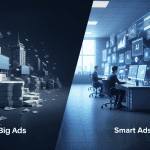
Big ad spends are losing their shine. Algorithms change. Costs rise. Results fluctuate.
Smart businesses are investing in trust instead of reach.
Founder led content. Local partnerships. Small creators with real audiences. Honest storytelling. These things do not scale overnight, but they compound.
Customers do not want another polished brand shouting at them. They want businesses that feel human and accountable.
If your marketing sounds like everyone else, you disappear. If it sounds like you, you stand out.
High tech efficiency meets high touch connection
Here is the irony most people miss.
The more automated the business becomes behind the scenes, the more human it can be on the front end.
AI handles the boring parts. Systems handle the repetition. That frees time and attention for actual connection.
Customer service gets faster. Communication gets clearer. Experiences feel intentional instead of rushed.
The businesses winning in 2026 are not choosing between technology and humanity. They are using technology to protect humanity.
Resilience is the new competitive advantage
In this environment, resilience beats hype.
Resilient businesses can absorb shocks. Price changes. Supplier issues. Demand swings. They do not panic. They adjust.
Lean cost structures give breathing room. Automation gives speed. Sustainability gives loyalty. Community gives forgiveness when things go wrong.
Bloated businesses have none of these advantages. When pressure hits, everything breaks at once.
This is why some SMBs look calm while others look exhausted. The difference is not effort. It is design.
The uncomfortable truth about cutting fat
Cutting fat is uncomfortable. It requires admitting that some things were mistakes. Some hires. Some tools. Some ideas that sounded good at the time.
But refusing to cut fat does not preserve stability. It delays failure.
The SMBs surviving 2026 are not heartless. They are honest. They know that every dollar, every hour, and every decision has to earn its place.
This is not about becoming ruthless. It is about becoming intentional.
The future belongs to disciplined builders
There is a clear split happening in the SMB world.
On one side are businesses clinging to old models, old assumptions, and old comforts. On the other are builders who accept reality and design accordingly.
The winners are not the biggest spenders or the loudest brands. They are the most disciplined.
They cut what does not work. They automate what does not need emotion. They invest where trust and leverage meet.
Also Read: Small Businesses Are Rebooting Marketing in 2026 and Late Movers Will Pay
Cut the fat or fall behind
This is the choice 2026 is forcing on small and medium businesses.
You can protect inefficiency and hope conditions improve. Or you can redesign your business for the world as it is.
Lean teams. Smart tools. Clear values. Real connection.
That is not a trend. That is the new baseline.
And the businesses that refuse to adapt are not being punished by the economy. They are being outpaced by competitors who understood the moment faster.